Senior Product Manager (2020-Present) | Lead Game Designer (2017-Present)
A Forward from the Designer
In January of 2017, I joined the Scrabble GO team as Lead Game Designer, representing Scopely and working with our development partner and future acquisition, Pier Play. Scrabble GO turned into a passion project, and I dedicated 4+ years of my career to its development and operation. I was the first Scopely employee to join the team and served as Lead Game Designer through 2020, eventually changing titles to Sr. Product Manager, though still acting in a Lead Game Designer capacity.
Over 50 of the 54 months that make up Scrabble GO’s development and operation, I worked as lead defining our feature set. I led everything from the initial game concept, early UI & UX, and the game’s meta. During my time as Lead, I had the pleasure of working with other designers, both content and systems. However, for over a year, I was the sole game designer on the product.
Within this page, you will find an overview of Scrabble GO, my contributions, and get an idea of the features and content I led from initial game ideation through sign-off and live operations.
Scrabble Adventures
Overview
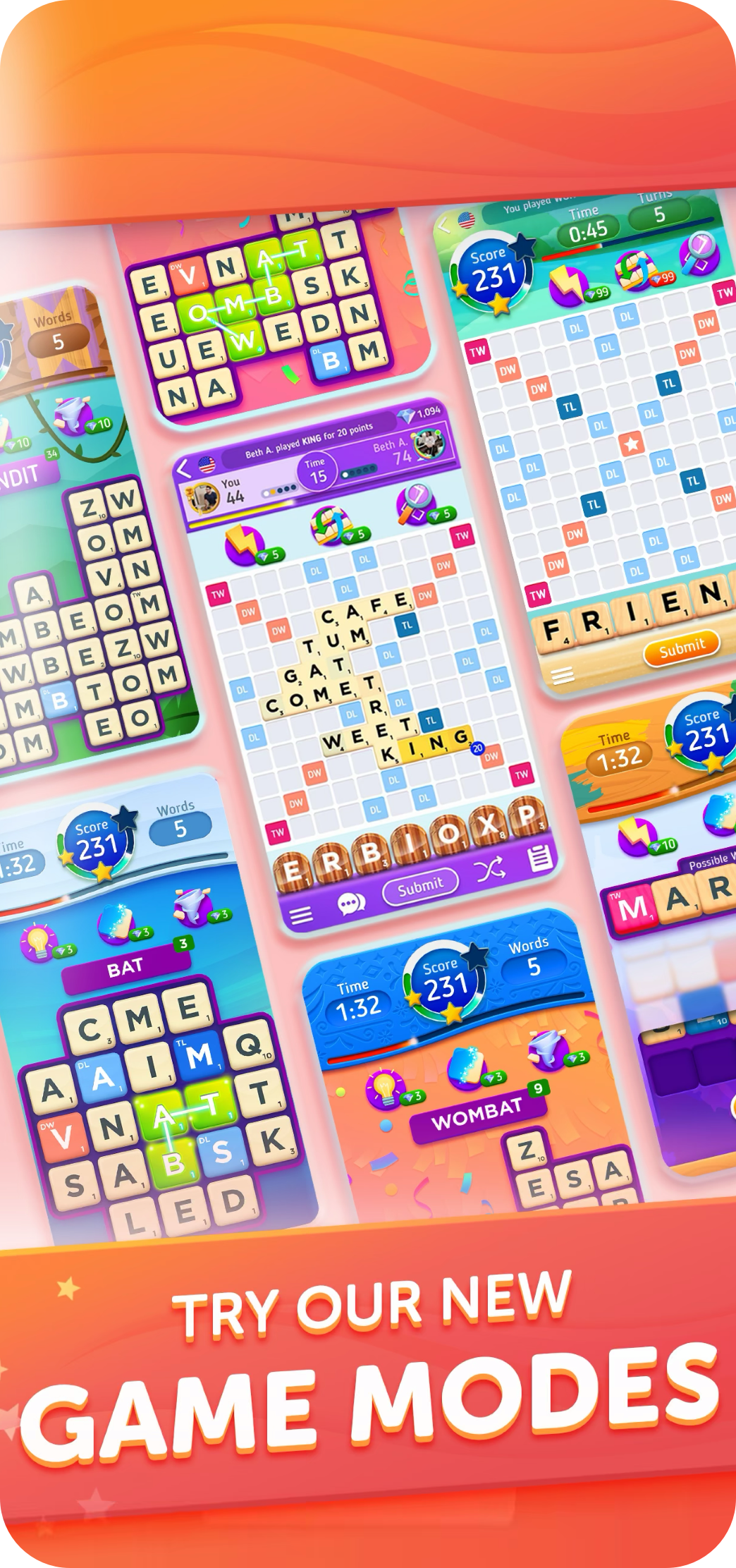
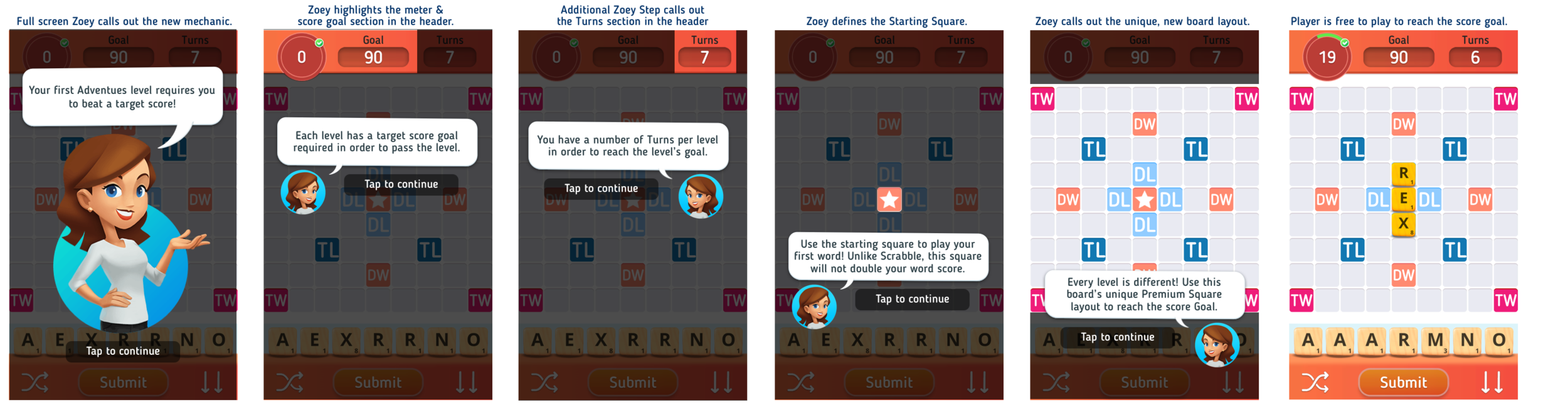
Adventures is a feature primarily developed by our internal Barcelona studio, but the Level Design came from my side of the sea. With the Adventures feature, players have hundreds of linear, individually designed levels that allow players to play Scrabble in an all-new way. Tasked at reaching target scores and achieving other game objectives to solve each puzzle, players progress through a series of levels during week-long events.
Level Design
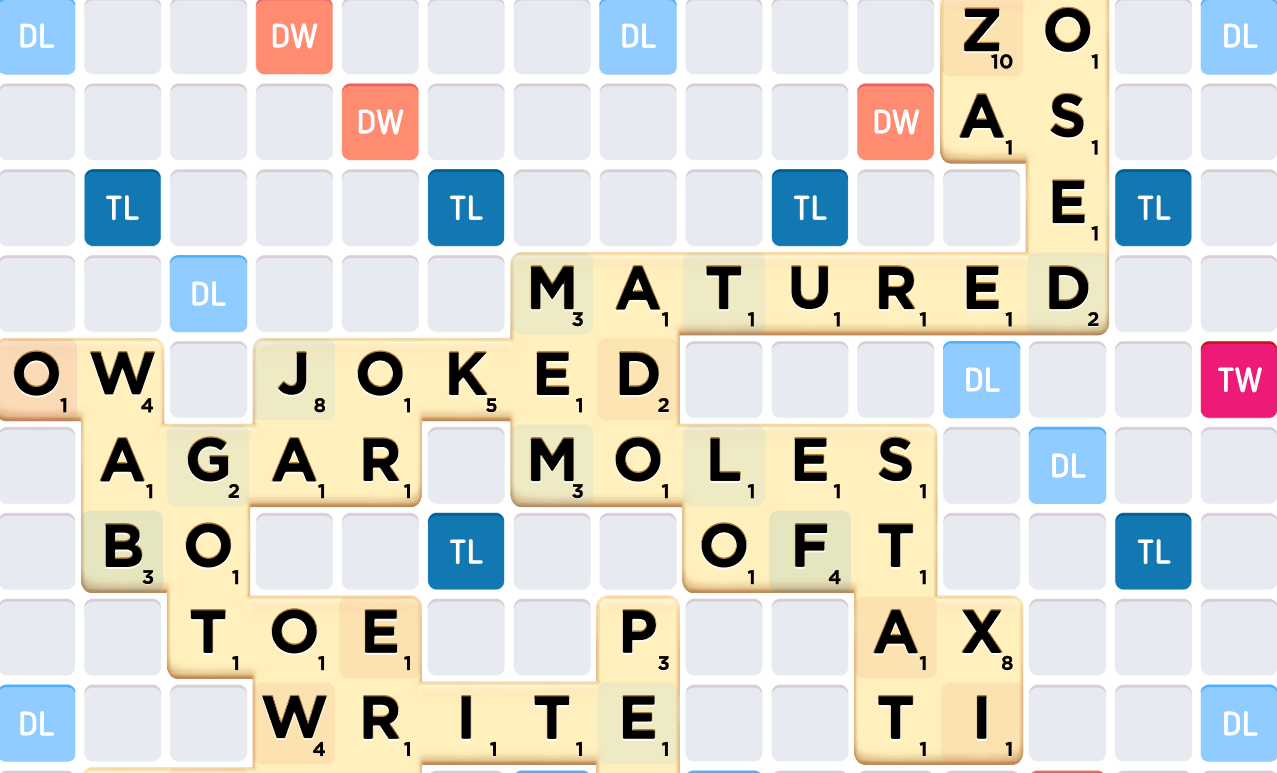
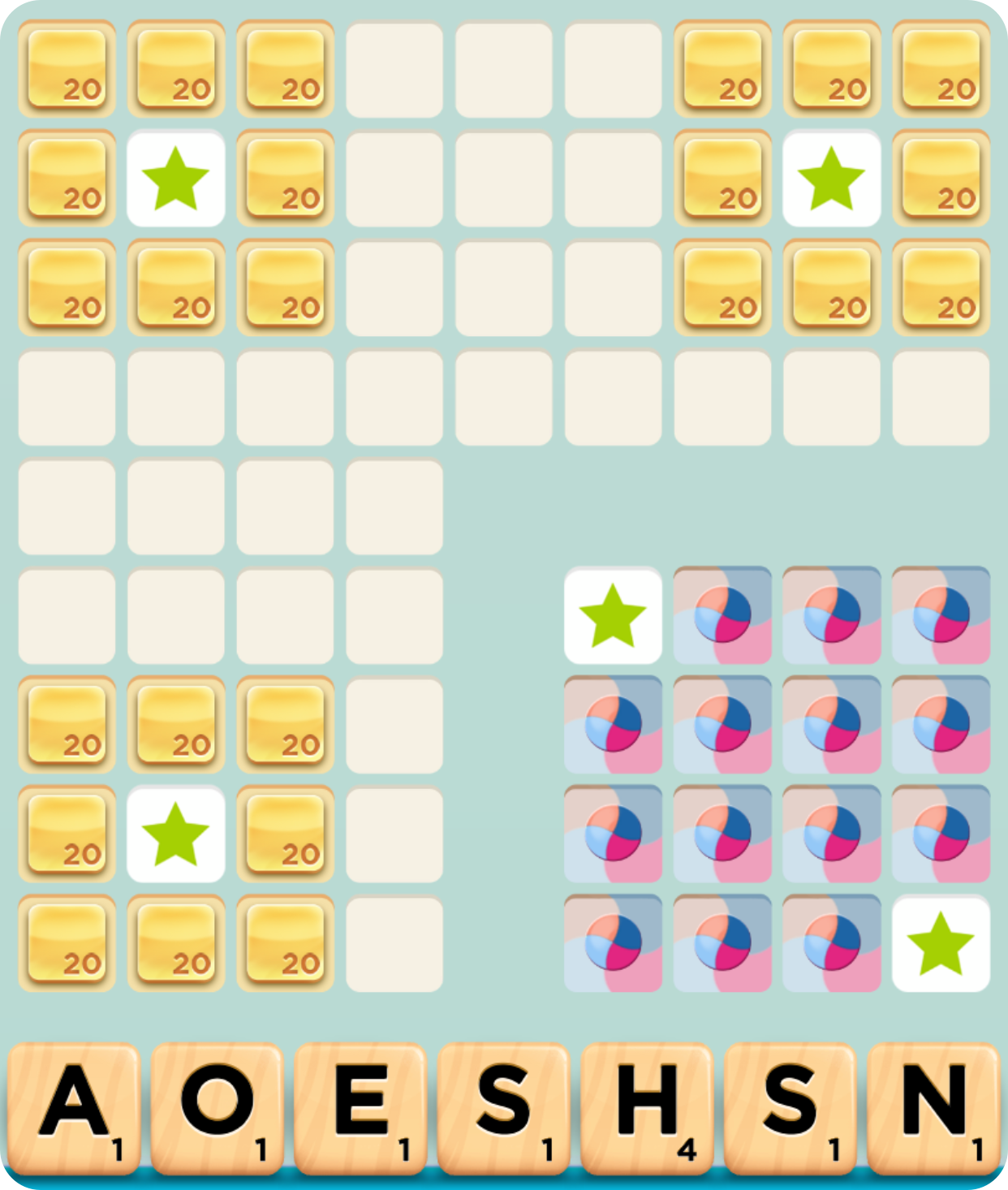
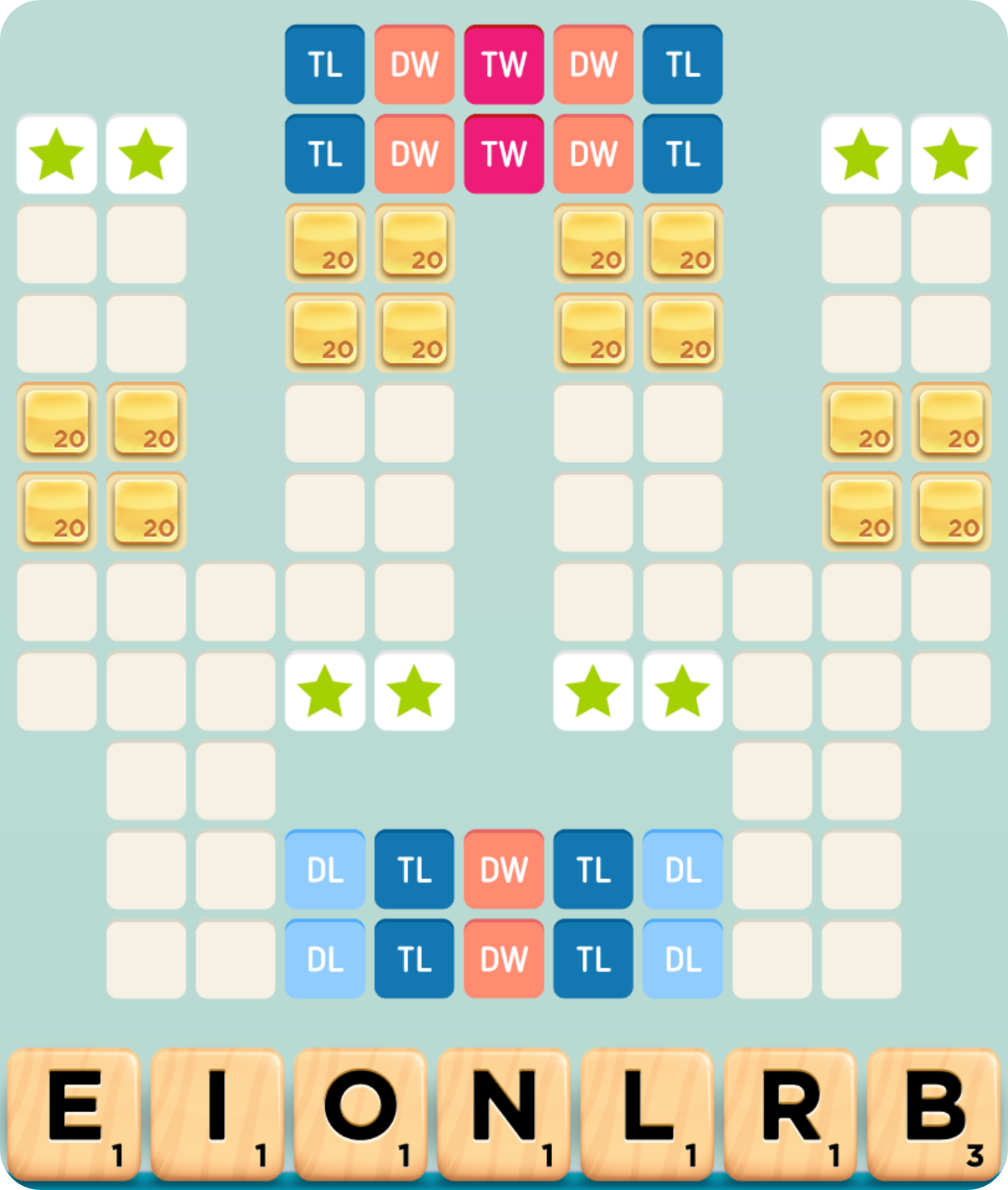
As an experienced Level Designer, I taught and led our team to create fun, unique, surprising, and challenging experiences. One of our most beloved features to date, Scrabble Adventures provides a Match-3 style twist to classic Scrabble gameplay. Using an in-house tool, we define sizes, borders, shapes, and obstacles for each level. With this pallet of mechanics at our disposal, we find new ways to utilize all of the design tools available. Initially launching with ~75-level events, we quickly learned that 75 simply wasn’t enough and doubled down on our design and team, hiring additional heads to ramp up production.
Variety
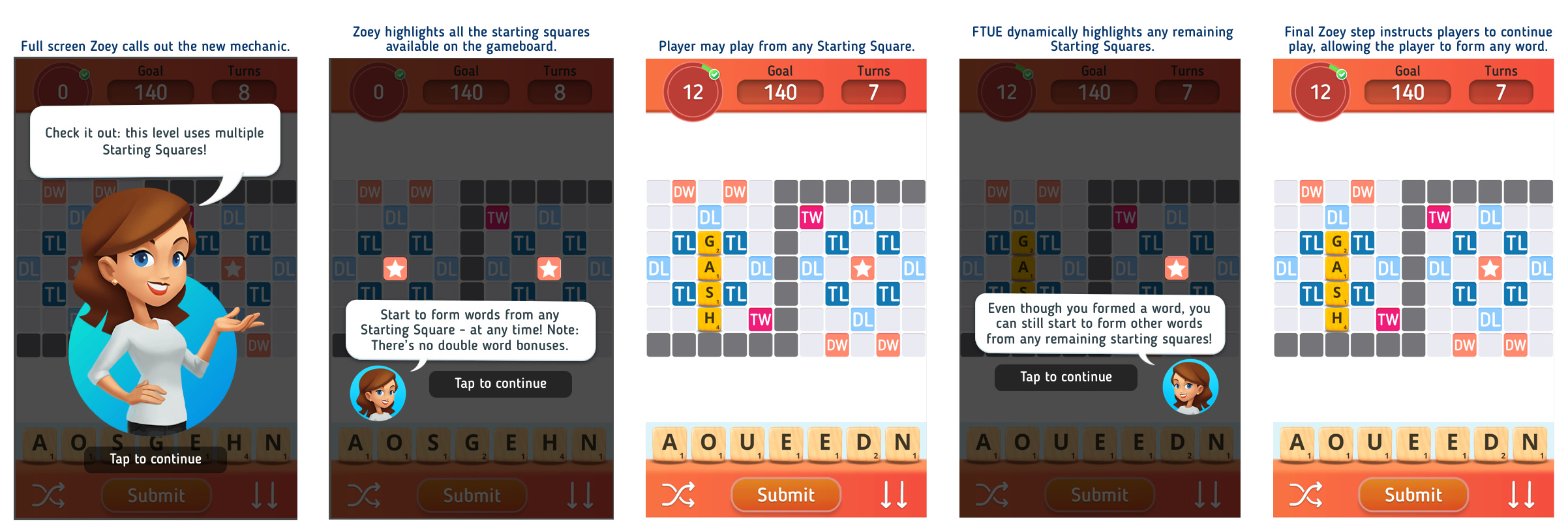
Gameboard shapes and sizes vary greatly, and boosters and obstacles provide new mechanics that allow for hours of addictive gameplay. We focused on engagement over monetization, and decided not to use the same winrate pinches found in most free-to-play puzzle games. True to the IP and gameplay our players expect, we found new ways to challenge and delight within the confines of the Scrabble ruleset. Modifications to score, mechanical twists on bonus squares, and non-linear objectives force players to think beyond playing the most valuable word from their Tile Rack.
Impact
Scrabble Adventures had and continues to have a significant impact on player sentiment and engagement KPIs. Social channels changed tone with Scrabble Adventures’ release, and the core audience has been thrilled by the experience, altering player behaviors without cannibalizing existing features and game components. With our curated mechanics, we created a feature that has endless replayability, takes advantage of random number generation, and allows designers to create a variety of experiences that connect with our players
Puzzle Path
Overview
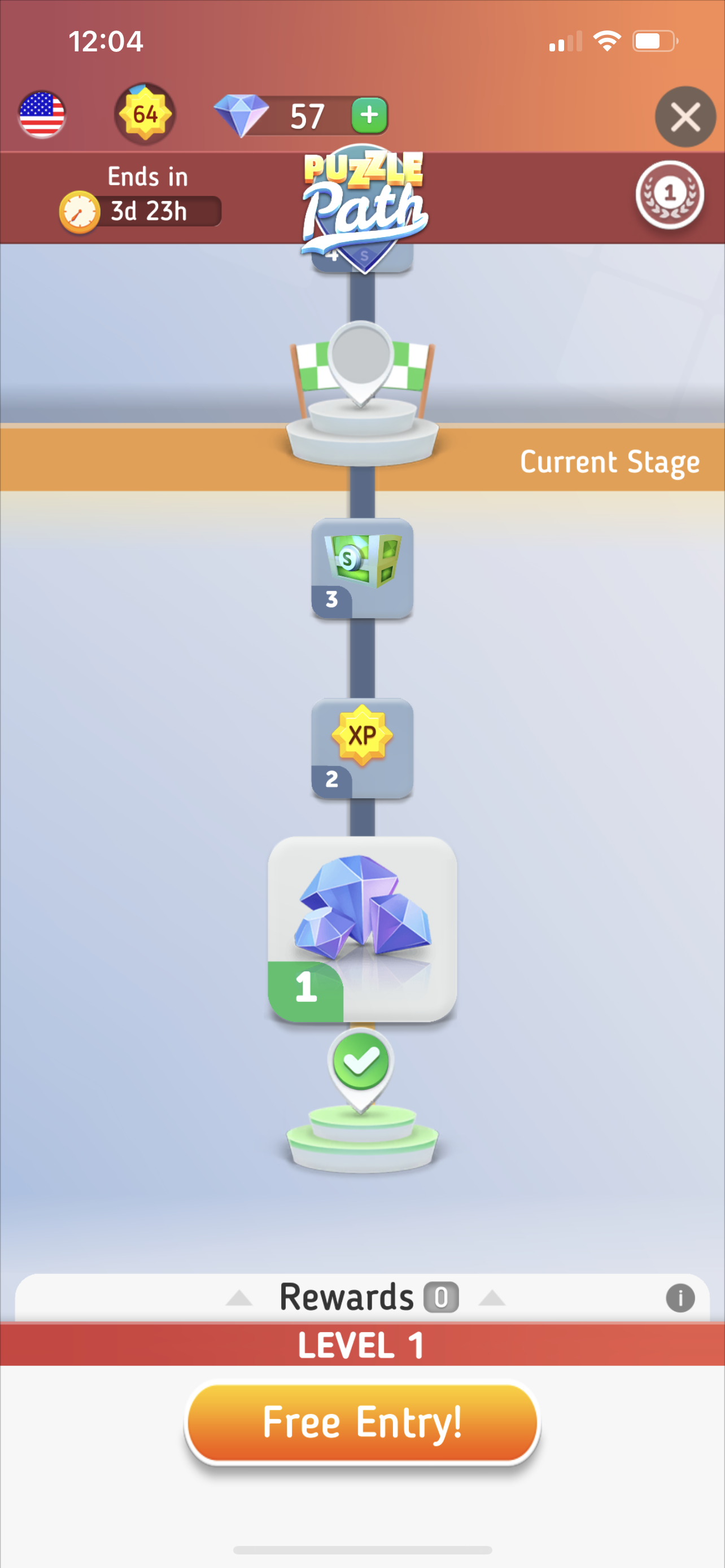
Puzzle Path introduced a brand new way to experience classic Scrabble gameplay. A common thread found among our player base included the desire for core Scrabble gameplay without the frills and colorful gameplay found in a Candy-Crush style presentation. I was responsible for the feature’s game design from initial concept and UX to the admin tools and implementation of live gameplay events. This required focusing on the goal of creating an engagement-increasing feature that appealed to the core audience.
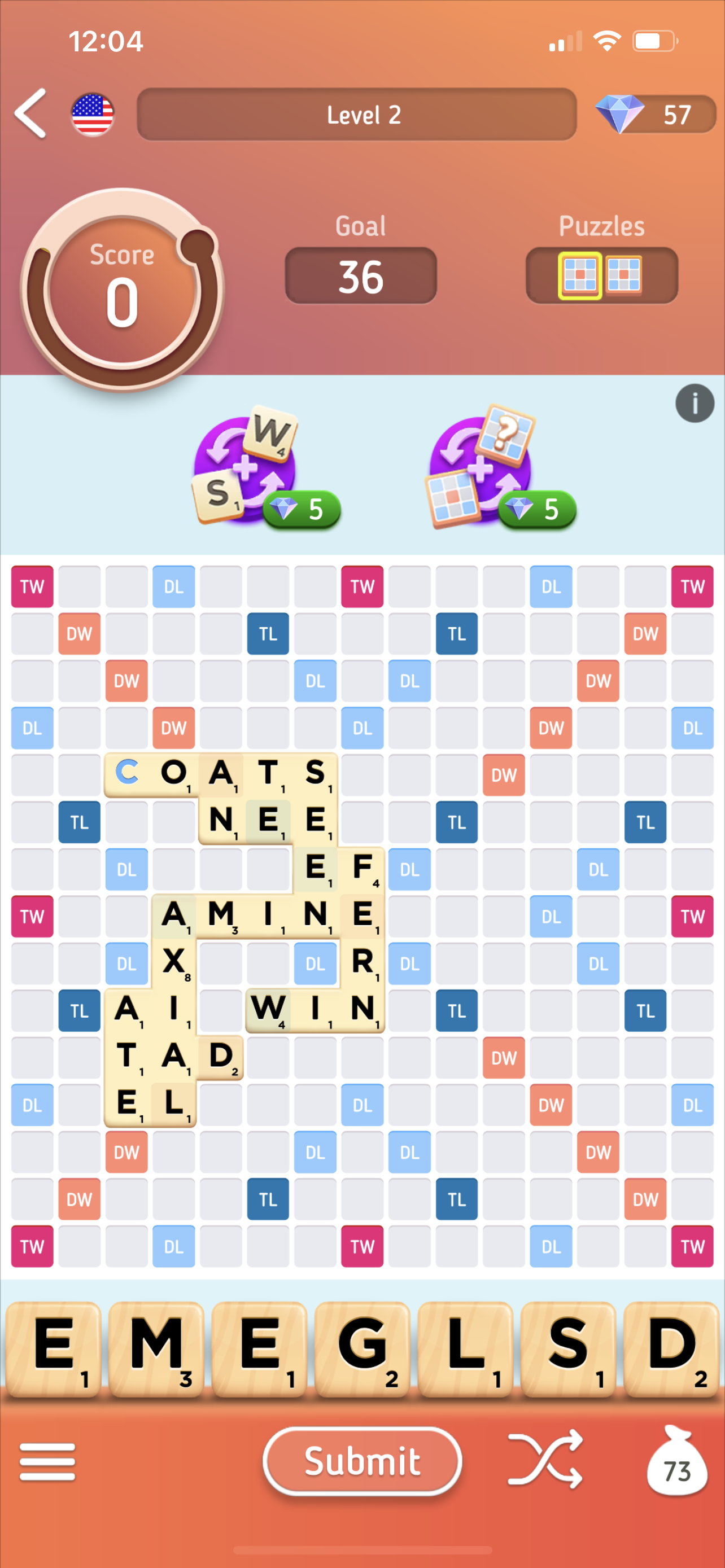
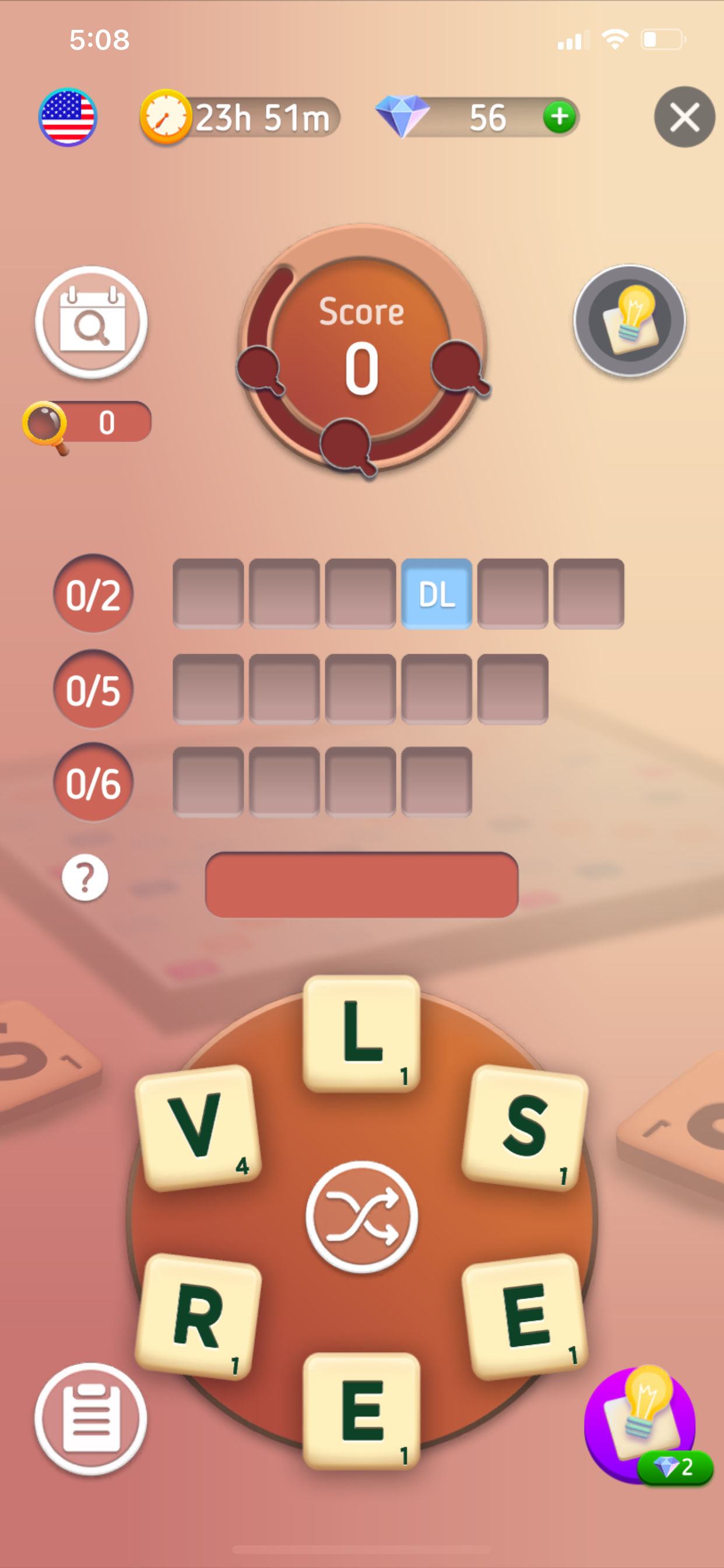
Inspired by a classic Scrabble component, often found in physical books still on the shelf today, Puzzle Path involves presenting players with gameboards in progress and associated racks of tiles. Tasked at finding the best move available, Puzzle Path built off of the core Scrabble concept and added twists to the experience.
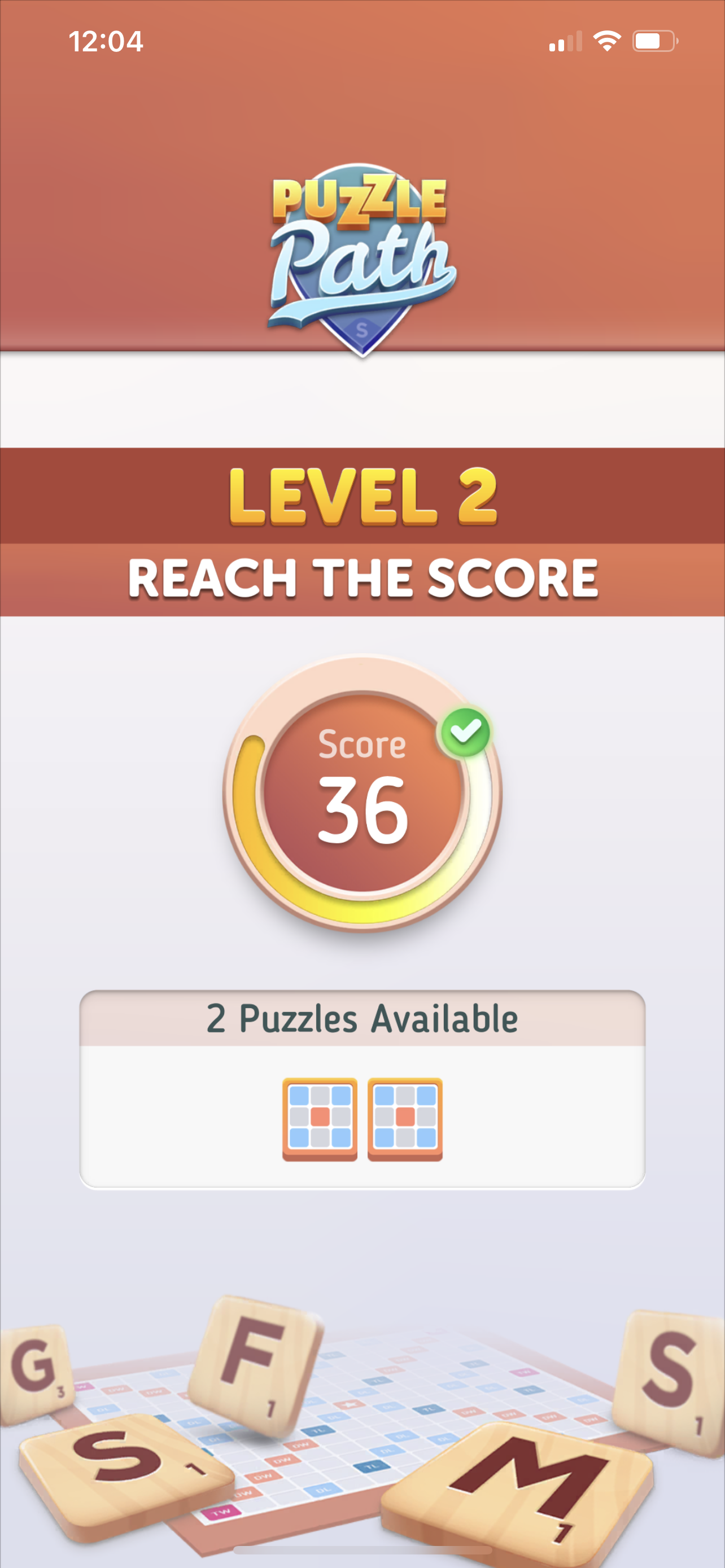
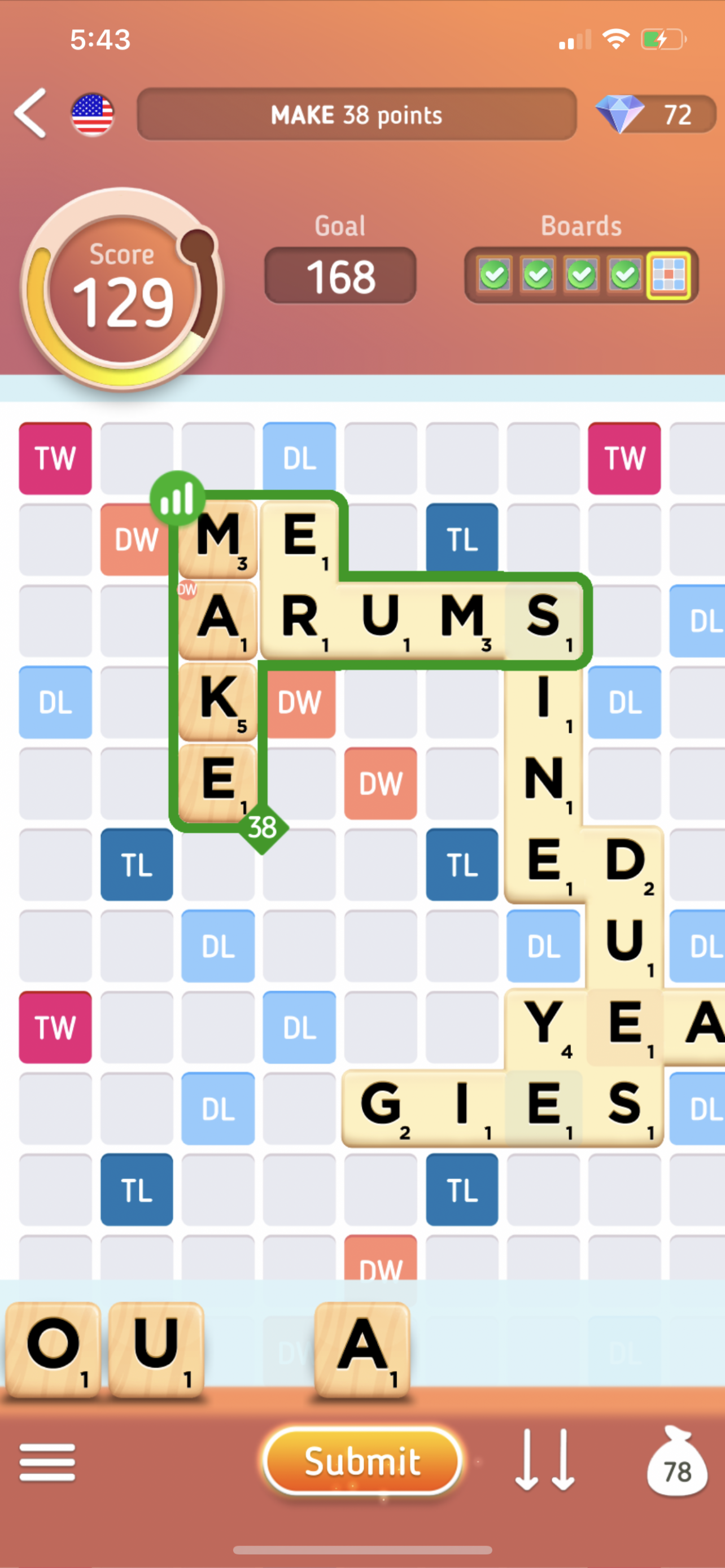
In Puzzle Path, players play through a linear series of 1 to 6 gameboards. They must achieve an aggregate target score, forming each level on the Puzzle’s Path. Multiple levels make up a stage, and players must beat all of the levels in a stage in order to move onto the next, capitalizing on a key King of the Hill mechanic, often found in Puzzle Games.
Procedural Levels & Segmentation
Puzzle Path uses a procedural level generation tool that allows thousands of gameboards to be generated within minutes across all supported languages. Designers input a series of requirements, such as a range for the number of tiles already on the board, rules defining the composition of tiles found on the rack, or a median target word score. Within the same admin tool, designers specify a difficulty per level, which then procedurally generates the target scores required to beat each level along the Path.
Segmentation is key, as it allows players of different skill levels to enjoy the same series of levels and stages, individually tailored to each player’s skill. Depending on the player segment, target scores are determined based on the percentile of all available word scores per gameboard. More accessible segments may require a score in the 75th percentile, while Master and Grandmaster segments require the 98th or 100th percentiles. This system allows for a single pool of thousands of levels to be explicitly selected for each specific player.
Impact
Puzzle Path raised several KPIs and proved to be both a financial success with ad revenue and IAP and increased retention during live events. With positive reception from the community, Puzzle Path proved there was a thirst in the community for classic gameplay that included new twists and a rewrapping of familiar mechanics, leading to the development of additional gameplay.
Word Search
Anagram Goals
As a team, we identified an opening for a daily retentive feature beyond a meer login calendar. I designed the Word Search feature of Scrabble GO to challenge players with a new anagram game every day, encouraging day-to-day retention. This mechanic would help boost daily return rates and give players something to do between PvP turns. Word Search presents players with a new grouping of letters each day, every month, and tasks the community to form all possible words using their provided pool.
Scrabble Twist
Word Search introduces a Scrabble twist to anagram gameplay by utilizing Scrabble Tiles and their associated point values - as well as Premium Word Squares that randomly appear when a word is successfully submitted. This took the gameplay of popular apps like Wordscapes and tied it directly to the Scrabble brand and IP, providing more than a copycat experience.
Generation & Impact
Another RNG-based, procedural feature, Word Search allows levels to generate in batches that work for all supported languages, using curated word lists and defined dictionaries. This feature proved to be a successful retention driver, achieving its goal of encouraging players to return to the app every day. Unique rewards presented and governed by a new currency encouraged players to complete all of the provided puzzles - accessed by our audience’s most loyal players.
Meta Beyond Gameplay
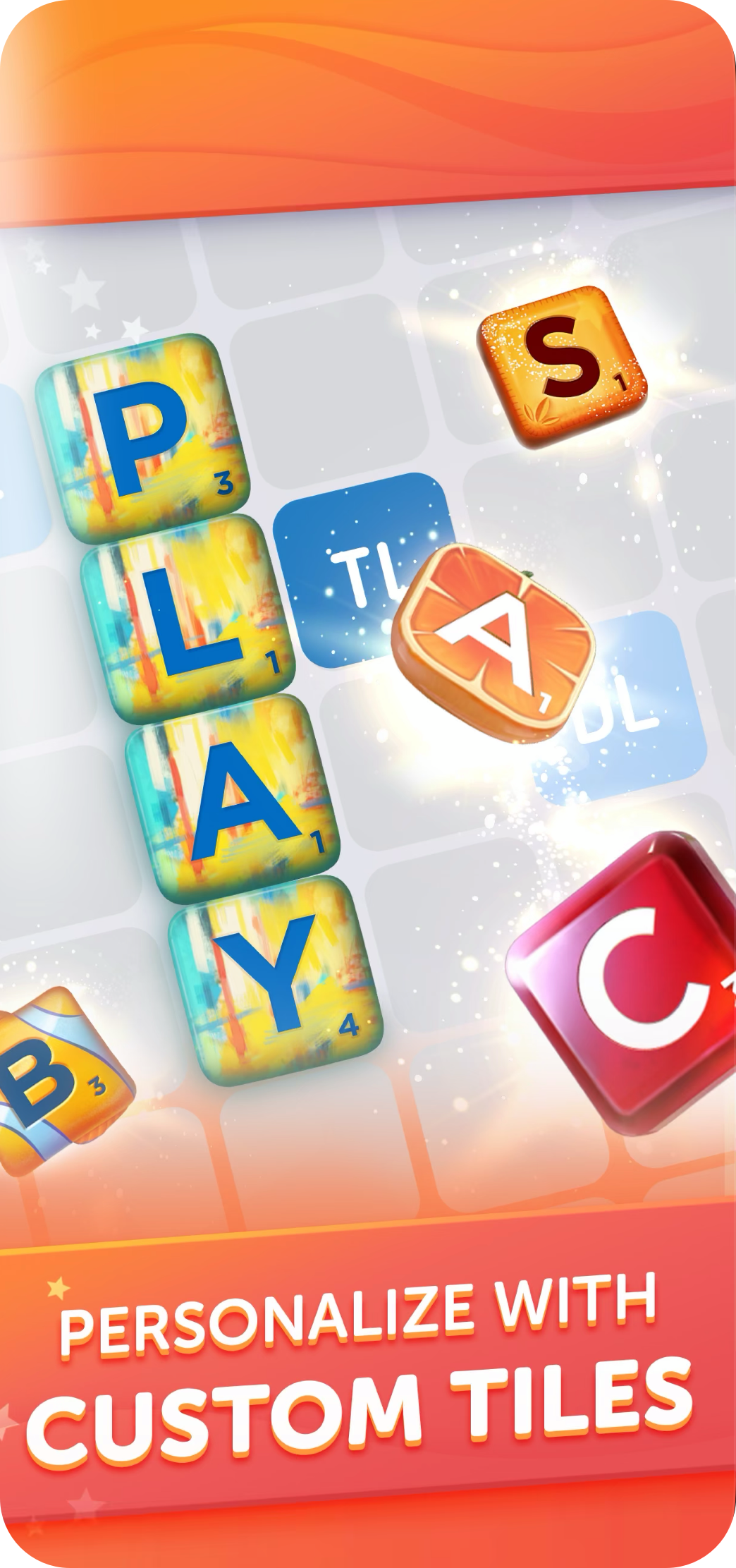
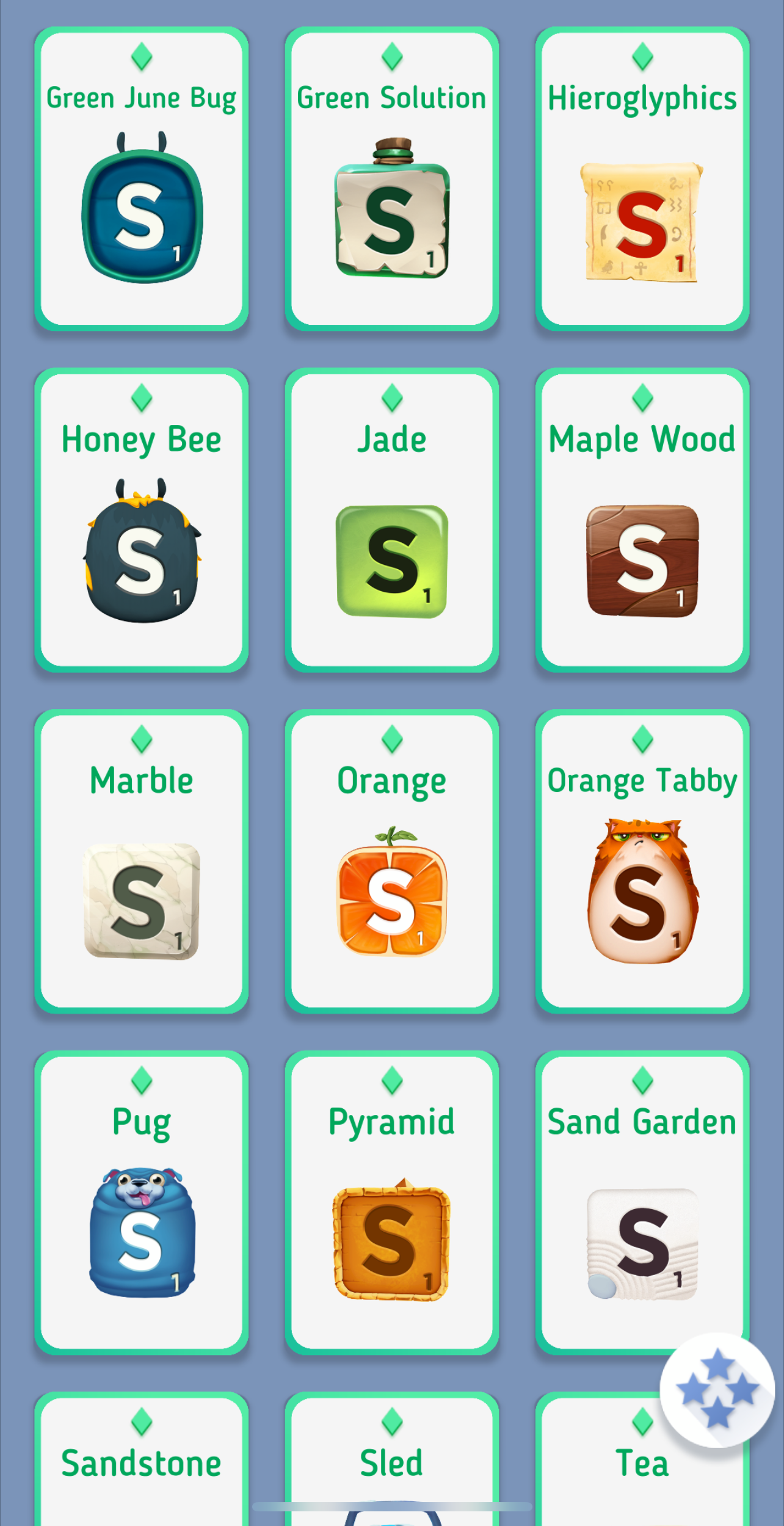
Early in the development of Scrabble GO, we created our Tile Collection Meta, a major driver of player engagement and spend. Players earn Cards from a variety of Chests, awarded throughout the app. Once a given number of each Card are collected, players are rewarded with a vanity-based Scrabble Tile. Players use these Tiles in core PvP games with their friends to show off their skill and dedication to the game. Live Ops events are driven by the draw of this collection-based meta and drive a boost to IAP and player engagement.
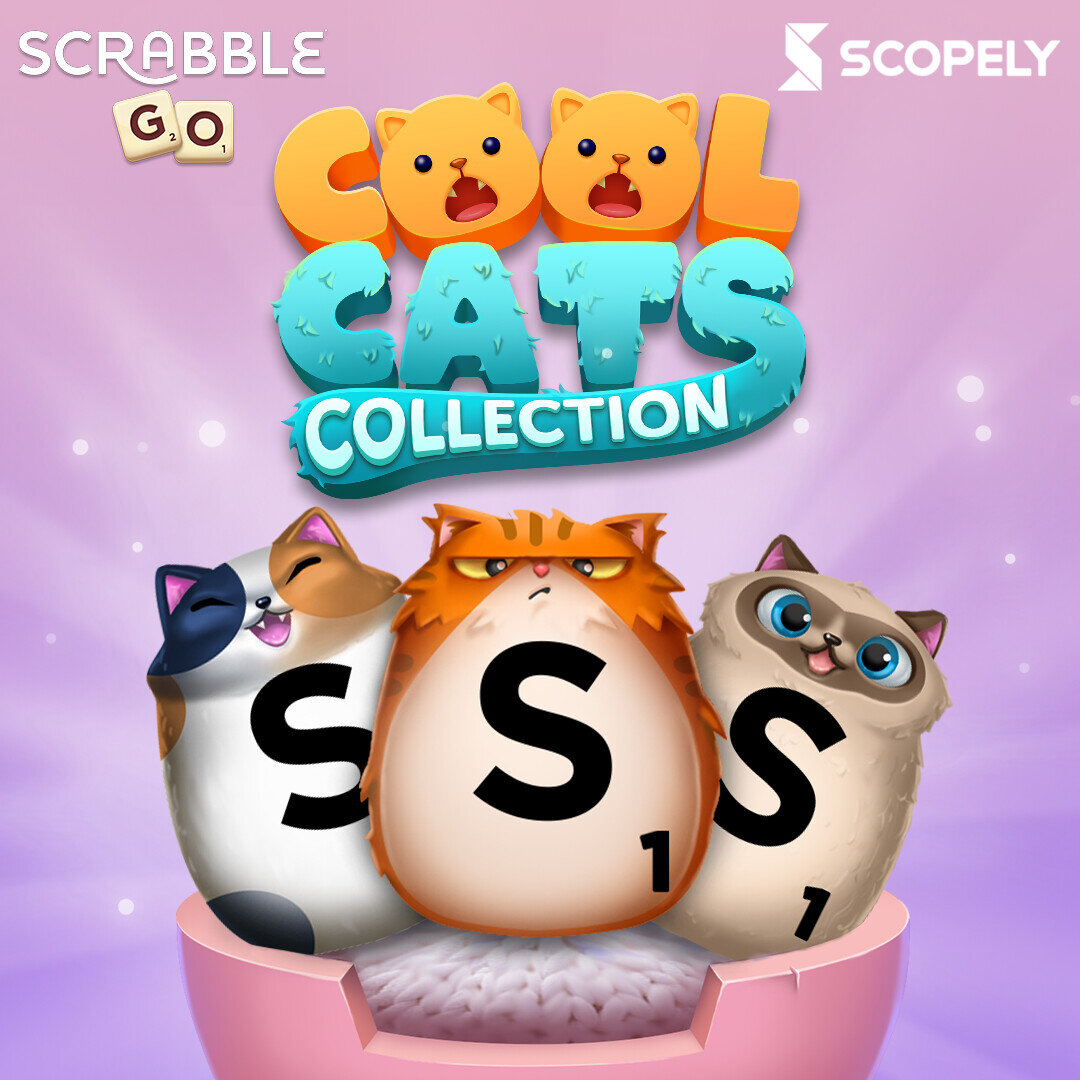
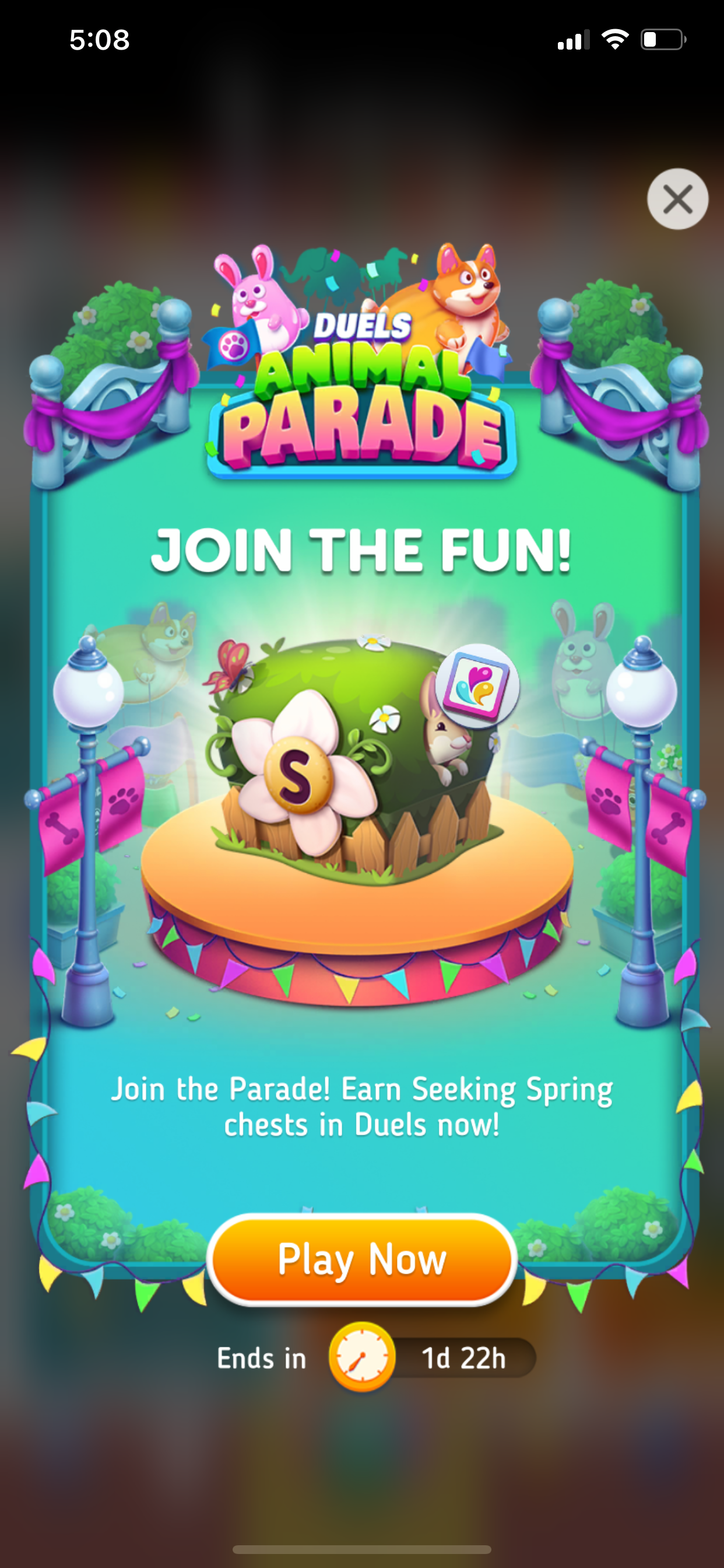
Beyond tentpole features, I also designed the tools and events that our Live Ops team uses with this meta, every day, to create exciting and fresh content for players to consume. From daily challenges to unique AI opponents, Live Ops tools and the collections meta allow for the creation of every event type we run in Scrabble GO.
The Arena
Word Drop
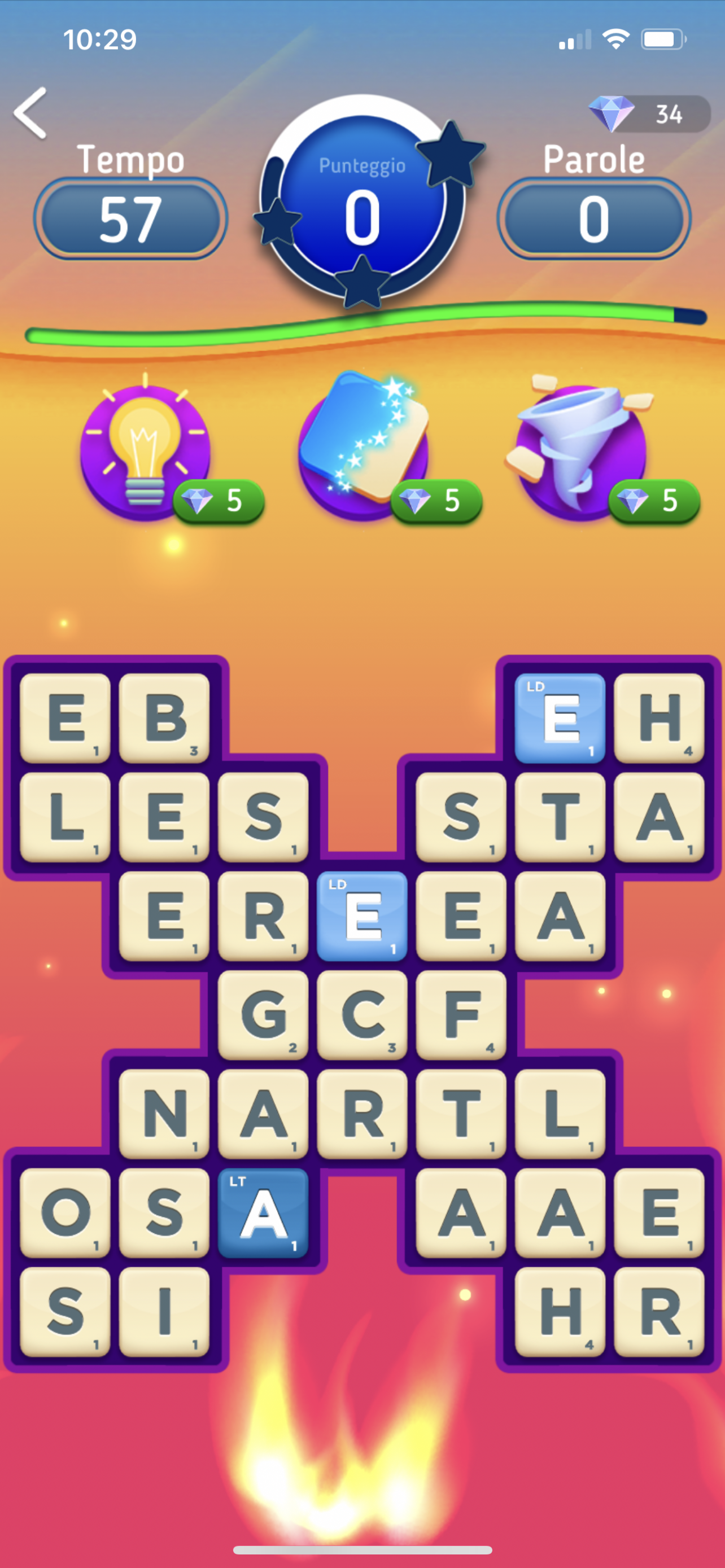
Word Drop provides a line-drawing, timed game mode that tasks players at quickly identifying valid Scrabble Words from a shaped gameboard. As words are drawn, their Tiles are cleared and new Tiles fall from the top of the screen to fill the gamespace. Each instance of Word Drop uses its own, unique board design, allowing for an endless variety of experiences within a single game mode.
Rush
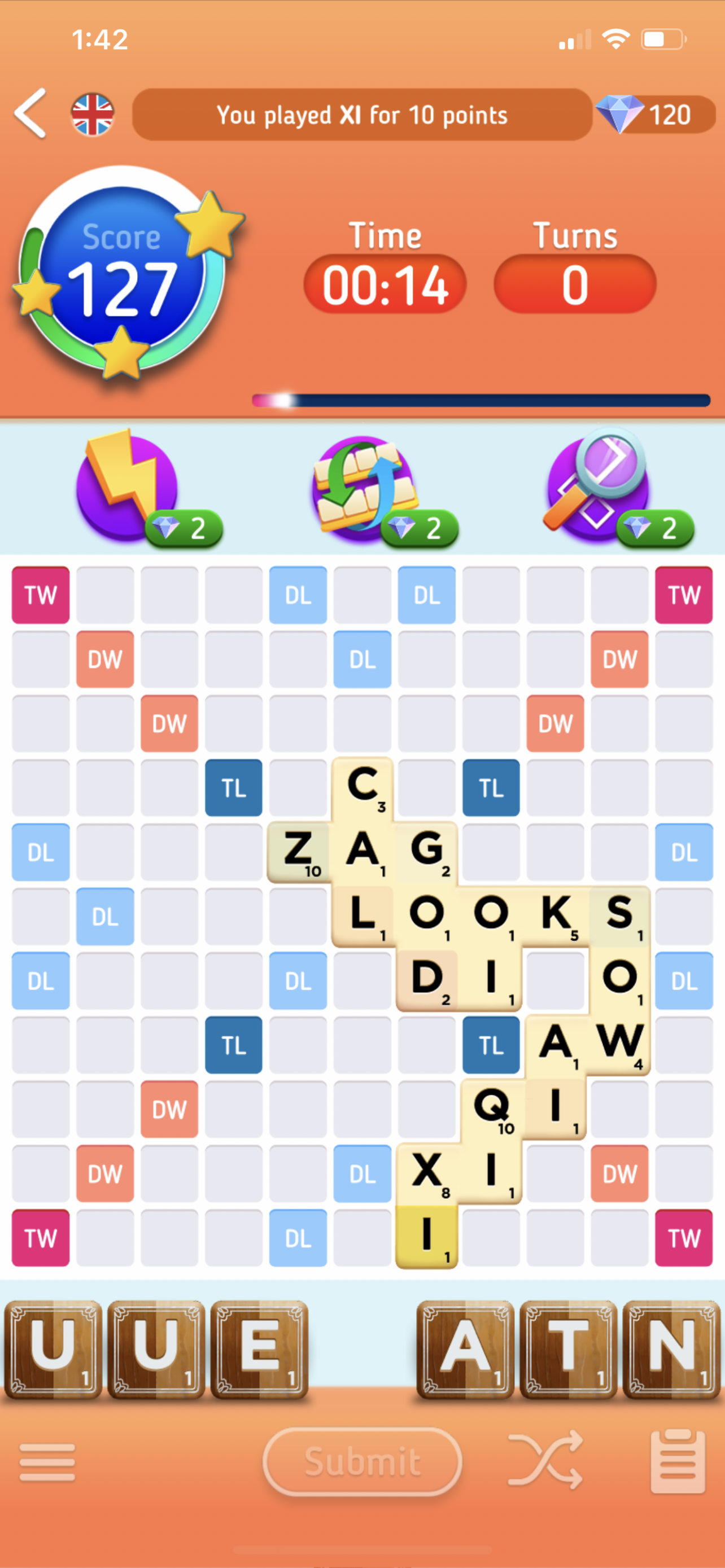
Rush lets players play against themselves on custom gameboards that change with each event. Designers customize a smaller-scale Scrabble board for each event, often tied to a Live Ops theme. Players have 3 minutes to play on these gameboards and are restricted to a number of turns and submissions. This feature scratches the ich for Scrabble gameplay in a single-player environment.
Tumbler
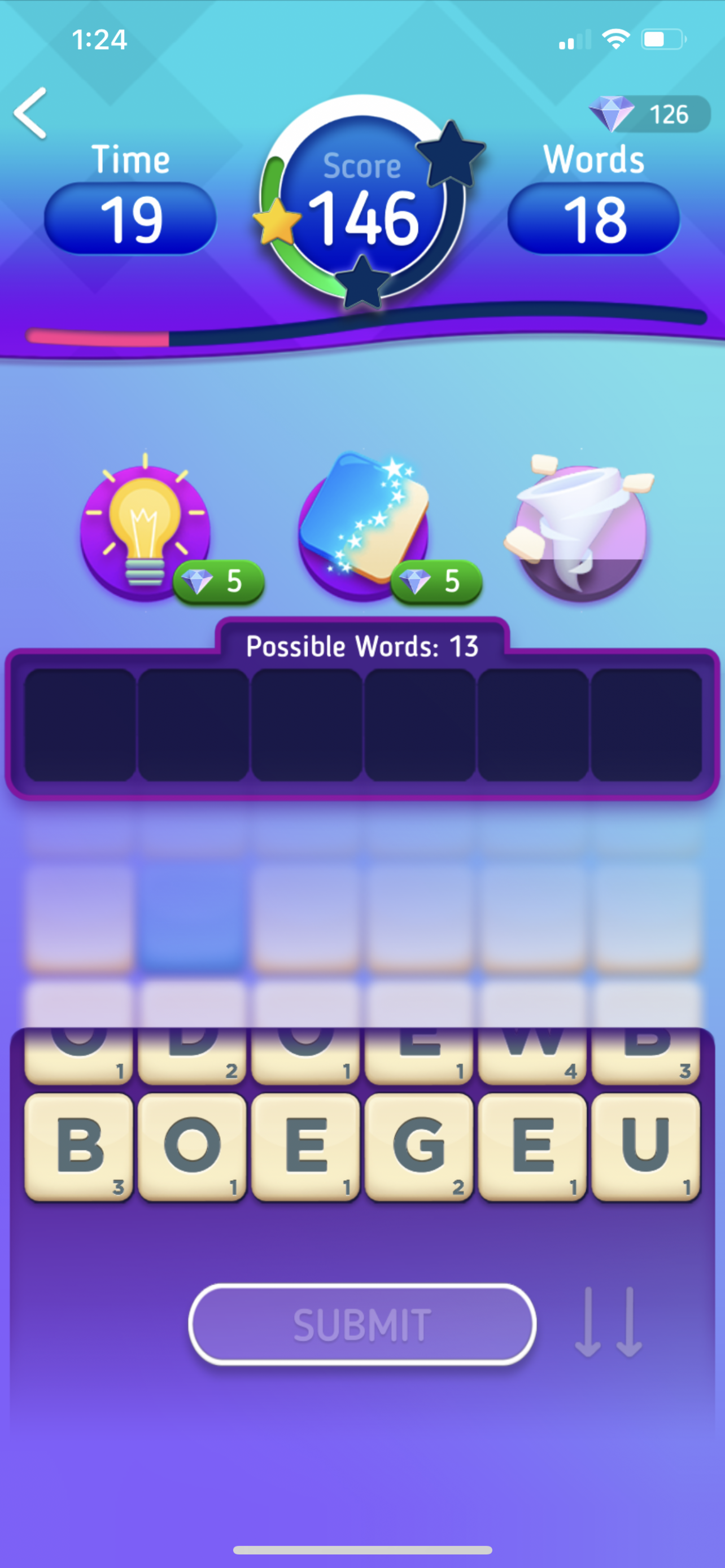
The Tumbler mini-game challenges players to find the best words from a series of tiles found on a new form of a Tile rack. Like core Scrabble, as words are submitted, new Tiles replace those that were used to submit the player’s words. Tiles are generated using a slot-machine reel mechanic, limiting each instance of Tumbler to a similar selection of Tiles. Letter and word-length bonuses encourage players to think about their submissions beyond simply finding the best word of the moment.
Arena Overview
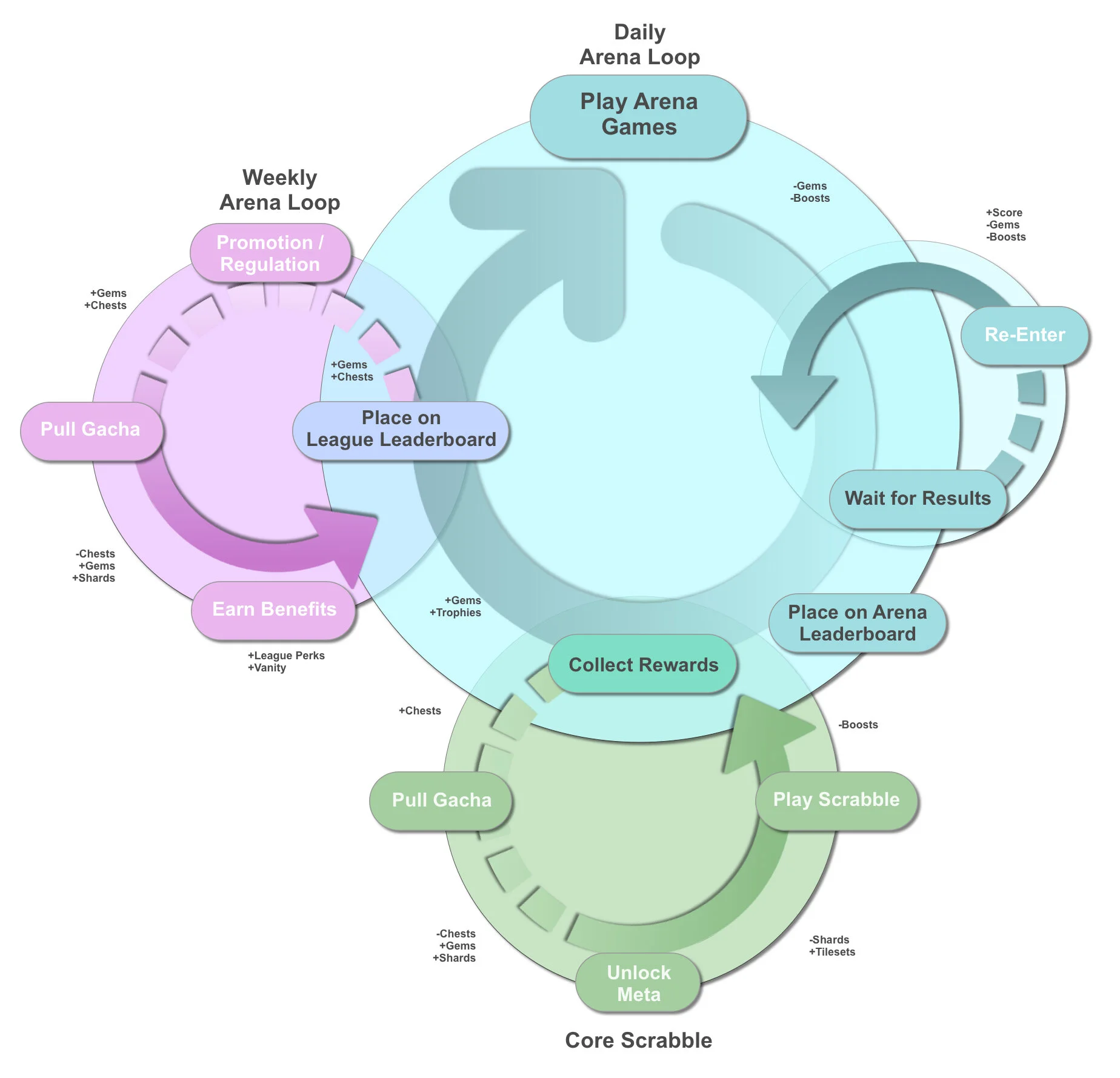
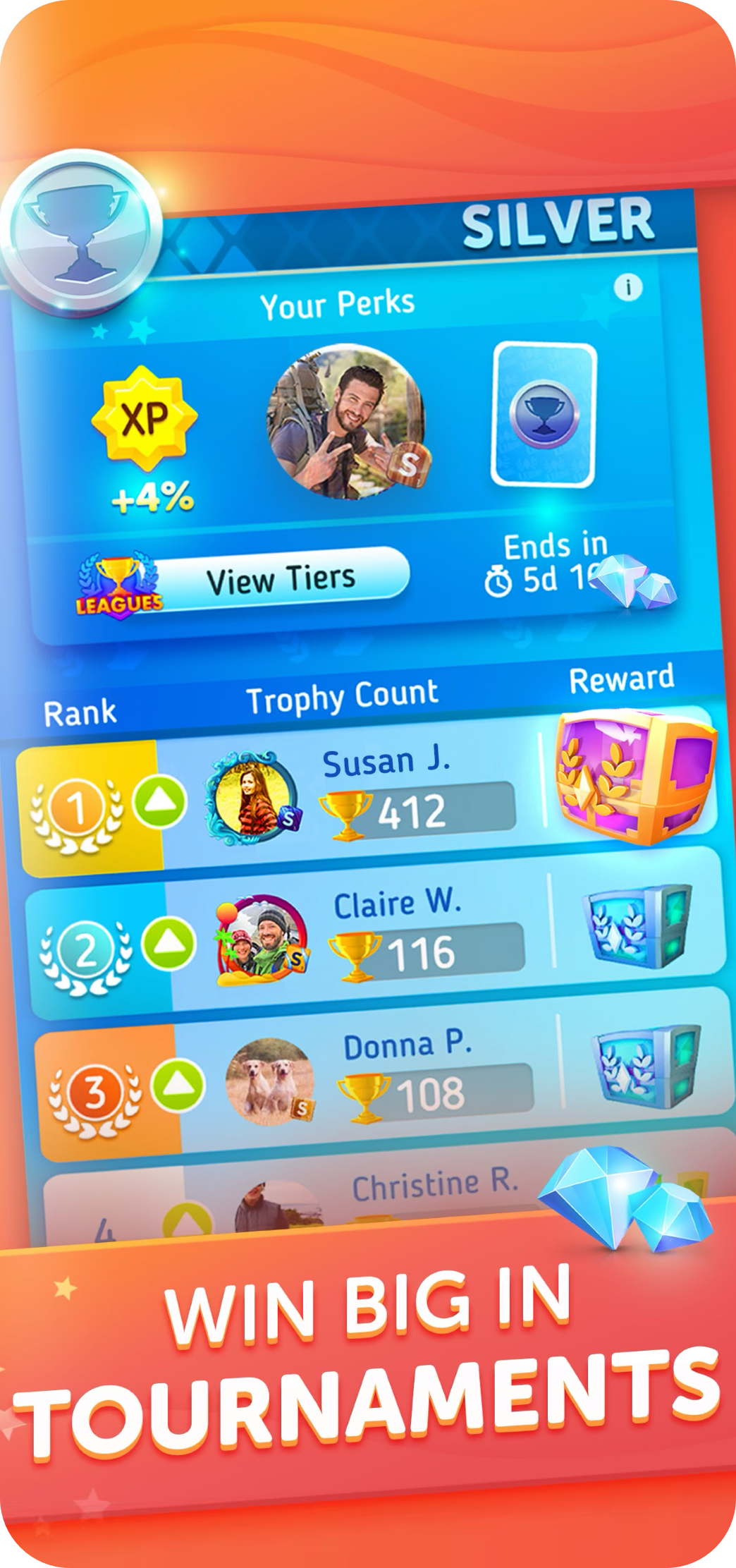
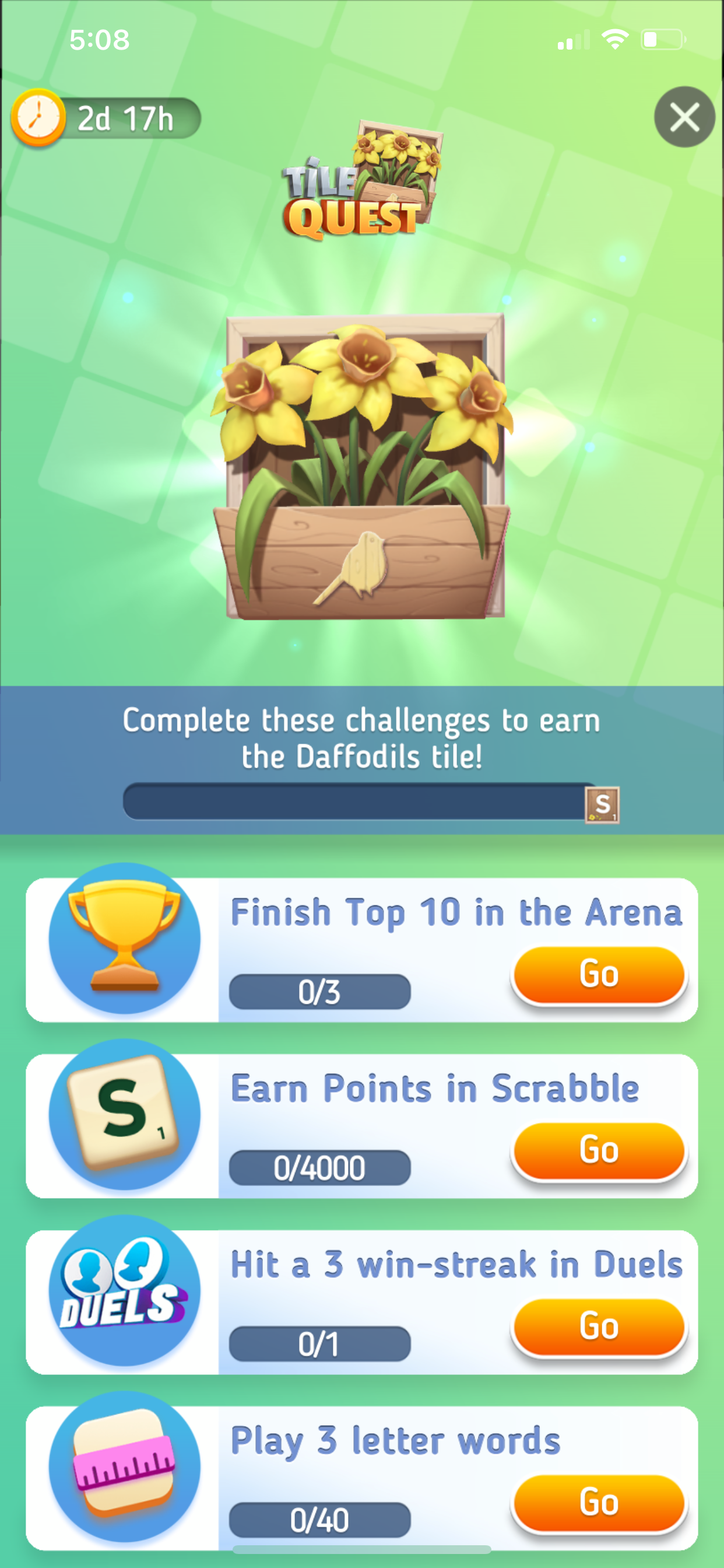
I was responsible for the Arena tab, its presentation, and its structure. This design defined the way in which Arena gameplay is implemented with our various Live Ops events. I also designed the Leagues system that adds a competitive twist, providing players with a carrot to become the best of their league each week. Leagues, based on “Trophies” earned from Arena games, encourage repeat play with each 4-hour event. The Ticket system allows players to play for free, bypassing the requisite use of a hard currency.
With a core loop defined to provide a primary source of monetization, the Scrabble Arena continues to drive players to spend their Gems and Tickets, and it allows them to compete in a competitive system. A series of boosts for each mini-game provide additional monetization, balanced to not rely on a Pay-to-Win mechanic. Along with entry fees, these Boosts help drive repeated spend. Free Entries, awarded as Tickets, allow both spenders and non-spenders to enjoy the Arena daily.